Backblaze B2 Now Mounts as a File Drive via Suite Studios
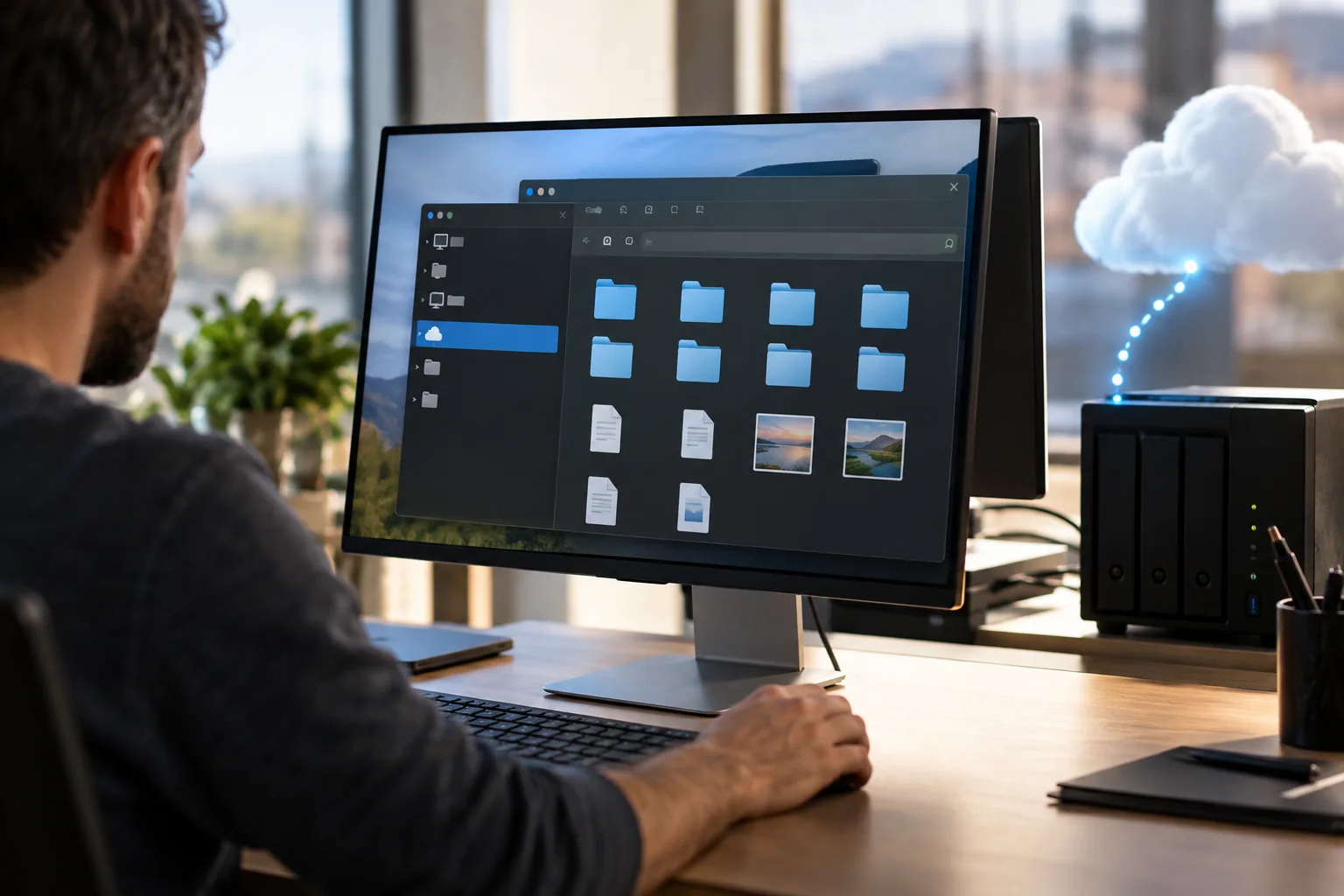
Backblaze B2 customers can now mount a bucket through Suite Studios and work with files as if they were on a local high-performance NAS, according to an announcement published September 10, 2026 by Backblaze. The integration, called Suite S3 Native File Streaming, places a familiar file system in front of standard S3-compatible object storage. In plain terms, a bucket is a container for objects in cloud object storage, and S3-compatible means the storage speaks the same application programming interface originally popularized by Amazon S3. NAS stands for network-attached storage, a shared file device that appears like a local drive to multiple computers. The new access layer streams only the parts of each file that an application requests, so users do not have to download an entire large dataset before starting work.
Behind the scenes, the data does not move into a separate proprietary system. An existing Backblaze B2 bucket can become the Suite file space directly. One file in Suite maps to exactly one object in B2, and the folder structure seen in the mounted drive matches the structure in the bucket. Files remain standard whole objects, B2 remains the system of record, and Suite provides the high-performance file access layer. This matters because teams can keep a single authoritative copy in object storage while still using desktop file-based tools. If an organization already stores files as standard objects in B2, Suite can connect to that bucket and make them available through its mounted drive. There is no second copy to create, no data conversion, and no separate ingest process.
The first target is media production. An editor can open high-resolution material in Adobe Premiere Pro through the Suite drive while a media asset management (MAM) platform such as iconik indexes the same library, Telestream Vantage processes the source files, and automation reacts to new objects written into B2. Each application reads and writes the same underlying media, so there is no need to keep parallel copies for editing, transcoding, archive, and distribution. The same architecture extends beyond media. Life sciences and biotech teams can make genomic sequencing, microscopy, medical imaging, and instrument-generated data available to researchers without maintaining full copies in every location. Geospatial and earth observation groups can work with satellite imagery, drone captures, LiDAR scans (a laser-based method for measuring three-dimensional surfaces), and GIS datasets while keeping source files centrally stored. Engineering and design teams can access CAD assemblies, simulations, 3D models, digital twins, and high-resolution scans. Research and higher education can create shared access to large scientific datasets for distributed teams on a common storage foundation. These are emerging uses, not packaged Suite solutions today, but the underlying pattern is clear: large datasets become more useful when people and applications can reach them without moving them into another storage silo.
Backblaze B2 is built for active data. Unlike cold archive tiers that charge more for frequent access, Backblaze describes B2 as always-hot, S3-compatible object storage with straightforward pricing and free egress up to three times average monthly storage, plus unlimited free egress through select CDN and compute partners. Always-hot means the storage is designed for immediate access, not for archives that must be thawed before use. Egress is the data transferred out of cloud storage, often a major cost in active workflows. That economic design makes B2 a foundation for data that remains in regular use, and Suite adds a high-performance file interface on top of it. For IT teams, this split of responsibilities is useful: the storage platform remains something the organization owns and controls, while the file access layer can be chosen for user experience. For users, cloud storage behaves more like a shared NAS.
The integration is available today for Suite S3 Native workflows on B2. Organizations already storing data in B2 can use an existing bucket as the Suite file space. Data currently on another cloud, on a NAS or SAN (storage area network), or on tape can be moved with assistance from Backblaze. Organizations making a qualifying commitment can receive assisted migration into B2 through Backblaze's Universal Data Migration program. The end state is one dataset on one storage foundation, with cloud applications accessing it through S3 and people accessing it through a high-performance drive. For readers evaluating similar file-and-object storage combinations, a managed European cloud and data infrastructure provider such as AEU Data can offer encrypted object storage and automated backups under the operational controls your organization sets, without hiding data behind a proprietary file layer.