How TAMS Turns Cloud Object Storage into a Shared Live Timeline
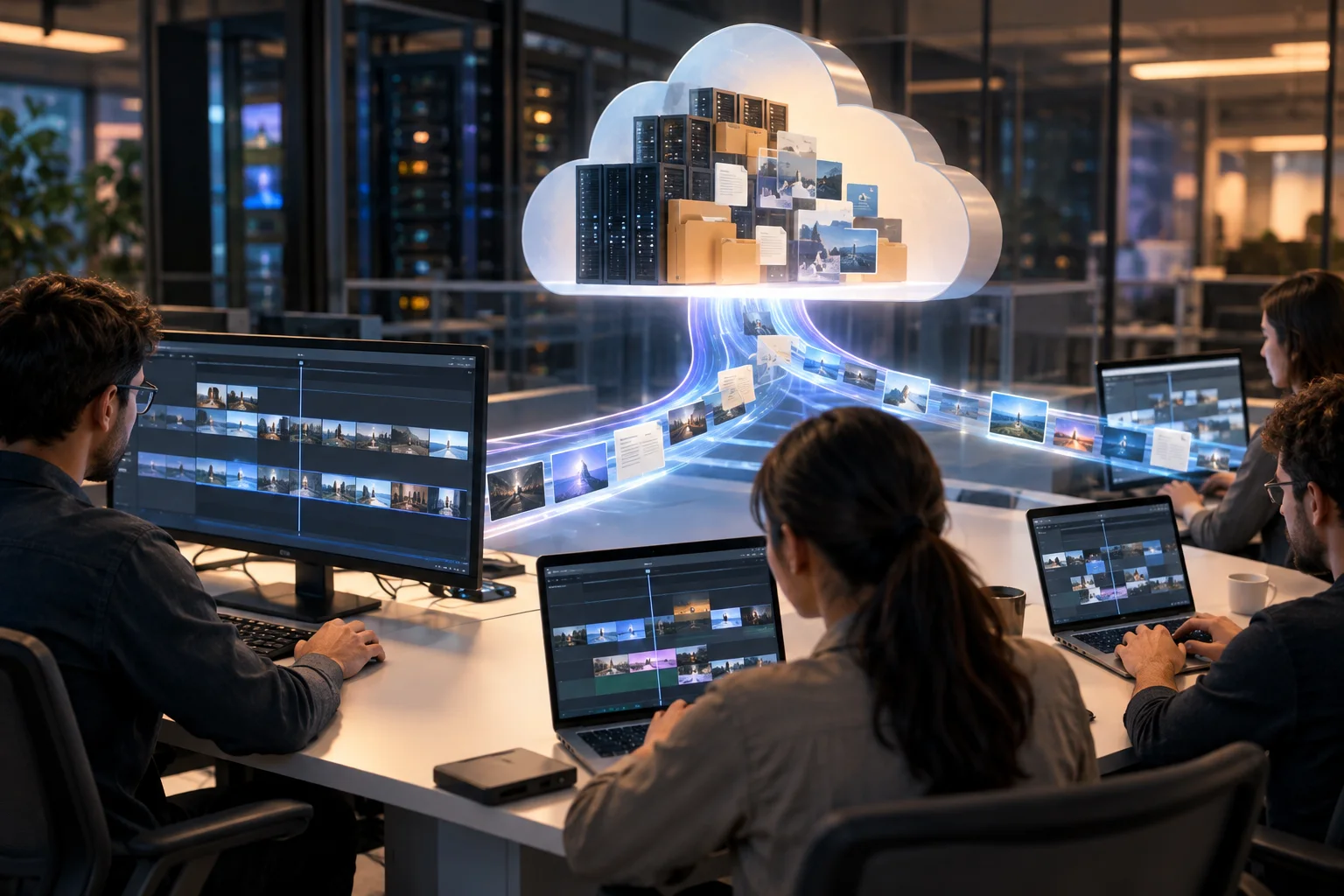
Dave Simon, senior director of media and entertainment alliances at Backblaze, writes in a September 3, 2026 post that the Time Addressable Media Store standard, or TAMS, offers a different model for live video: organize media by time, store it in object storage, and let interoperable tools access the same content through an open API. When a live event produces hours of footage across multiple cameras, editors should not have to wait for files to close before they can start working, and TAMS addresses that by organizing media around the timeline rather than individual files. Media is stored as timestamped segments that applications can access by time. A news editor can pull a quote from a press conference while it is still underway, a sports producer can create a highlight from a live game feed, and a content team can reuse the same moment for social clips, a longer edit, distribution, and archive without making a separate proprietary copy for every stage.
TAMS gives ingest systems, browser-based editors, desktop non-linear editors (NLEs), media asset management (MAM) systems, and archive platforms a common way to work with the same media. The store can run on one cloud, ingest can come from another provider, and editors can use the tools they already know. The specification grew out of BBC Research & Development's work on cloud-native media production and was published in 2023. Its purpose was practical: give different companies a shared interface for building interoperable media workflows instead of recreating isolated storage silos in the cloud. TAMS is not a replacement for an NLE, MAM, ingest system, or archive; it is the layer that helps those systems work together.
Backblaze highlights three ecosystem partners that demonstrate this approach: LiveWyer, CuttingRoom, and Drastic Technologies. LiveWyer provides TAMOSS, a Kubernetes-native implementation of the TAMS API; it handles the TAMS structure while orchestrating the underlying media segments stored in Backblaze B2. CuttingRoom brings an editorial-grade video editing experience into the browser, so editors can begin working with media while a live event is still being captured, find a moment on the timeline, create a clip, and assemble a story without waiting for an entire file to close or moving the media into a separate editing silo. CuttingRoom also allows real-time collaboration, imports and exports from market-leading MAMs, and has an optional ShortCut AI assistant for editing. Drastic Technologies' NetX platform provides the TAMS-compliant readers and writers that handle both ends of the media flow: ingesting and writing media into TAMS, then reading it back for playback and use in professional applications such as Adobe Premiere and Avid. With Backblaze B2 providing the S3-compatible storage foundation beneath the workflow, TAMOSS supplies the TAMS interface, CuttingRoom provides the browser-based editorial experience, Drastic NetX handles the critical ingest, writing, reading, and playback paths, and B2 stores the media segments at a price that makes large-scale access practical.
These companies are part of a growing ecosystem of roughly 14 technology providers with publicly identifiable TAMS implementations, products, readers, writers, or integrations. That broader ecosystem includes AWS, Konstrukt, LOGIC media solutions, LucidLink, Mimir, Reuters Imagen, Matrox Video, Mavis, Norsk, Techex, and Zixi, alongside LiveWyer, CuttingRoom, and Drastic Technologies. This is the broader idea behind an interoperable standard: no single company has to provide every part of the workflow, and customers do not have to replace every system they already own.
The use cases are not limited to national broadcasters. A news organization could ingest a live press conference, let an editor find a quote while the event is still happening, and publish a short clip before the full recording is finished. A sports production team could create proxy media (lower-resolution copies) for immediate clipping while retaining higher-resolution source material for finishing; this is particularly useful because some high-resolution MOV and MXF workflows are difficult to segment and read while they are still growing. A regional sports league or smaller event producer could avoid building a large on-premises storage environment and give remote editors access to the same media from wherever they are working. A corporate video team could record a town hall, create short internal clips, publish social content, and retain the full event in the archive using the same underlying media. The same approach could support houses of worship, education, government, live entertainment, and creator workflows. The common requirement is quick access to a growing body of media without multiplying copies and handoffs.
Live video is a storage problem before it is almost anything else. A multi-camera sports event, a continuous news operation, or a large livestream can generate terabytes of content quickly. Backblaze B2 starts at $6.95 per terabyte per month, with free egress up to three times average monthly storage and no egress fees through many compute and content delivery network (CDN) partners. That combination makes it easier to keep large live datasets available for editing, review, distribution, and archive. A TAMS workflow backed by B2 can look like this: use Drastic NetX to ingest and write live feeds into a TAMS store; segment and index the media as it is captured; let editors begin clipping and assembling stories in CuttingRoom; use NetX readers to play and access the same media from Adobe Premiere or Avid; keep the objects available for near-live production, distribution, and archive; and add a MAM where richer search, rights, governance, and catalog workflows are required.
Simon notes that the deployment test offered one final lesson: getting media into the store was straightforward, but making the service usable by the rest of the team required attention to operational details. Open standards reduce lock-in, but production still depends on good deployment practices. That is a healthy place for the industry to be: the pieces are becoming more modular, the interfaces more open, and media teams have more freedom to assemble the workflow that fits them. For teams building similar workflows, a managed object storage service such as AEU Data provides S3-compatible storage with encryption at rest and in transit, monitoring, and high availability, so production teams can focus on deployment practices rather than storage plumbing.
TAMS gives those tools a common language. TAMOSS makes the store deployable. Drastic NetX handles how media is written into and read from the workflow. CuttingRoom makes the content useful to editors and production teams. Backblaze B2 provides a scalable storage layer that makes the economics work.